
Typical situation
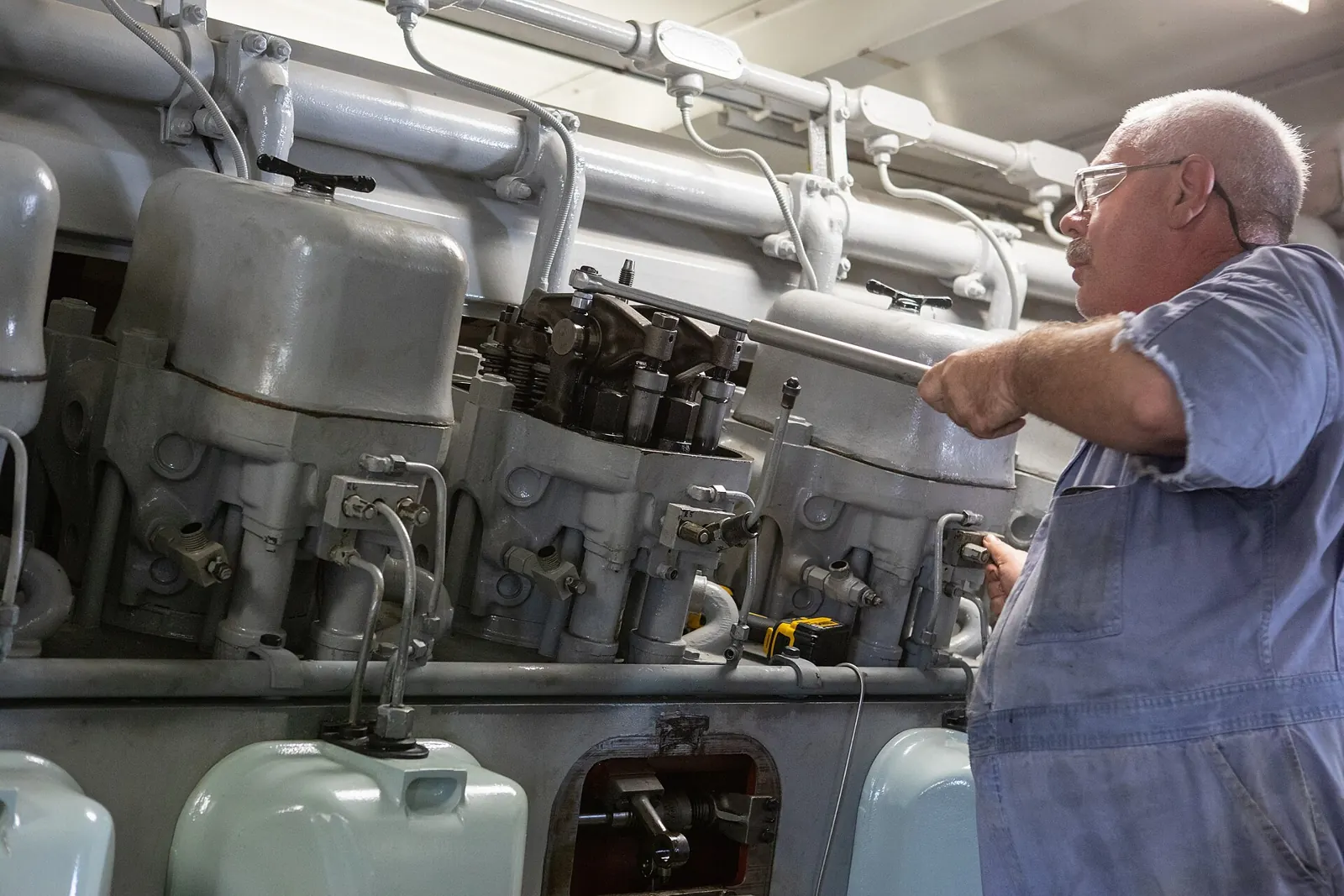
The maintenance superintendent reviews the week's schedule. The mechanic who has worked on the primary crusher for 28 years retires in March. He changes the bearing in less time than the procedure allows for, and nobody else knows how he does it. The work order only says “bearing replaced”.
This is a typical industry situation, not a client case.
In brief
It loses their experience and what was never recorded: the symptoms that announce a failure, the adjustments missing from the manual, the reason for each task and whom to call. That knowledge is recorded before they leave. First, identify the specialists close to retirement whose know-how nobody else has. Then move what they know into the maintenance strategy, the task lists, the failure catalog and the work order.
How much maintenance knowledge is close to retirement?
A lot, and maintenance technicians are the group with the highest demand. According to CCM-Eleva (2025), Chilean large-scale mining will need 36,895 new workers between 2025 and 2034, and 87.4% of them will replace people who retire.
| Profile | People |
|---|---|
| Mechanical maintainer | 9,257 |
| Electromechanical maintainer | 1,779 |
| Electrical maintainer | 1,680 |
| Instrumentation maintainer | 357 |
| Total maintainers | 13,073 |
| Source: CCM-Eleva (2025), pp. 115 and 123. The mechanical maintainer is the profile with the highest demand in the study. The study assumes effective retirement at 60. | |
In 2024, 17.2% of mining companies' own staff were 55 or older, according to the same study. And the risk is not only in their own staff, because 41% of contractor staff are maintenance workers.
The same happens outside Chile. According to MiHR (2026), Canadian mining expects 212,556 exits between 2026 and 2035, and heavy-duty equipment mechanics are among the hardest jobs to fill.
What exactly is lost when the person leaves?
What the person knows and never wrote down. Polanyi (1966) put it in one sentence: “we can know more than we can tell”. In maintenance, that know-how takes five forms, and each one has a place where it should end up.
| What they know | Example | Where it should end up |
|---|---|---|
| The symptoms that announce a failure | A noise or a temperature that shows up weeks before | Failure catalog and inspection task lists |
| The reason for each frequency | Changing a component earlier than the manual says | Maintenance strategy, by failure mode |
| Adjustments that are not in the manual | A clearance or an assembly sequence specific to the equipment | Work procedures |
| The history of each item | What was changed, when and why | Technical close-out of the work order |
| Whom to call | The supplier or the alternative spare part that works | Materials master and the area's supplier list |
The standard already asks you to deal with it. ISO 55001:2024 adds clause 7.7, on knowledge, according to the NQA (2024) guide. Among other things, it asks you to retain existing knowledge and keep it accessible when deciding.
How do you measure who is at risk?
With a score per person that combines when they leave with how unique their know-how is. The method comes from the IAEA (2006), which developed it for the nuclear industry, and it works just as well for mine maintenance.
| Value | Attrition factor: when they leave | Position factor: how unique their know-how is |
|---|---|---|
| 5 | This year or next | Critical and unique, undocumented, 3 to 5 years of training and no ready replacement |
| 4 | In the third year | Critical and partly documented, 2 to 4 years of training |
| 3 | In the fourth year | Important and systematized, 1 to 2 years of training |
| 2 | In the fifth year | Procedural, less than a year of training |
| 1 | In the sixth year or later | Common knowledge |
| Score = attrition factor × position factor. 20 to 25, immediate action. 16 to 19, priority. 10 to 15, high importance. 1 to 9, important. Source: IAEA (2006), tables 1 to 3, summarized. | ||
The IAEA makes a useful point: high performance is not the basis for a high position factor. What counts is whether anyone else can do what this person does.
How do you capture that knowledge before the person leaves?
With a six-step method that starts a year before retirement, not the week before. The maintenance team itself can run it.
List people and dates. With HR, note who retires, who may leave and when, for the next three to five years.
Score each person. Multiply how close their departure is by how unique their know-how is, each factor from 1 to 5, as in the table above.
Pick the equipment that matters. For each person in red, cross what they know with equipment criticality. Start with critical equipment that only that person knows in depth.
Interview them in the field, in front of the equipment. Ask about failure modes, symptoms, adjustments, tools and suppliers. A conversation in the office captures less than a walk beside the equipment.
Move what they said into the deliverables. Symptoms go into the failure catalog and inspection task lists. The reason for each frequency goes into the maintenance strategy, and adjustments into procedures.
Check it with a peer. Before the departure, a younger technician performs the task with the new procedure, and the one leaving corrects them. If the peer cannot do it alone, something is still unwritten.
What is captured gets used when the maintenance manager brings it to the weekly meeting. If the new failure catalog does not show up in the notifications of the following weeks, the knowledge is back in a document.
What should you check when the departure is a year away?
Go through these points with the supervisor of the person who is leaving:
- Their risk score is calculated, and management knows it.
- The critical equipment that only this person knows in depth is listed.
- Field interviews are scheduled, in front of each of those items.
- Every failure mode they described is in the failure catalog, with its symptoms.
- Every task they perform differently from the manual has its reason written into the maintenance strategy.
- A peer performed each critical task with the new procedure, without help.
- The suppliers and contacts they use are in the materials master or an area list.
Frequently asked questions
What is tacit knowledge in maintenance?
It is what a technician knows how to do and is not written in any document. For example, recognizing a failure by its sound, or knowing which adjustment a particular machine needs.
How far ahead should you start?
At least a year before the departure. According to the IAEA (2006), critical and unique know-how can take 3 to 5 years of training, so the score should cover the next five years.
What if the person has already retired?
Part of what they knew can be rebuilt from the history of work orders and notifications, and by interviewing the people who worked with them. If the person is available, paid advice by the hour during the transition helps close the gaps.
Next step
Do you have key technicians close to retirement and a maintenance strategy that does not record what they know? The Maintenance Diagnostic for the Standard compares your strategy with the standard and with what your system needs. It delivers the gaps, with the steps to close them, in 4 to 6 weeks.
Sources
- CCM-Eleva (2025). “Estudio de Fuerza Laboral de la Gran Minería Chilena 2025-2034: Diagnóstico y Recomendaciones” (Chilean large-scale mining workforce study), 10th edition, December 2025, pp. 10, 12, 115, 118, 123 and 131. ccm-eleva.cl
- MiHR (2026). “Canadian Mining Labour Market Outlook 2026”, Mining Industry Human Resources Council, baseline scenario 2026-2035, pp. 34 to 37. mihr.ca
- IAEA (2006). “Risk Management of Knowledge Loss in Nuclear Industry Organizations”, STI/PUB/1248, Vienna, tables 1 to 3, pp. 8 and 9. www-pub.iaea.org
- Polanyi, M. (1966). “The Tacit Dimension”, p. 4. Listing of the 2009 University of Chicago Press edition. chicagoreference.com
- ISO (2024). ISO 55001:2024, “Asset management. Asset management system. Requirements”, 2nd edition, July 2024, clause 7.7. iso.org
- NQA (2024). “ISO 55001:2014 to 2024 Gap Guide”, transition guide from a certification body. nqa.com